

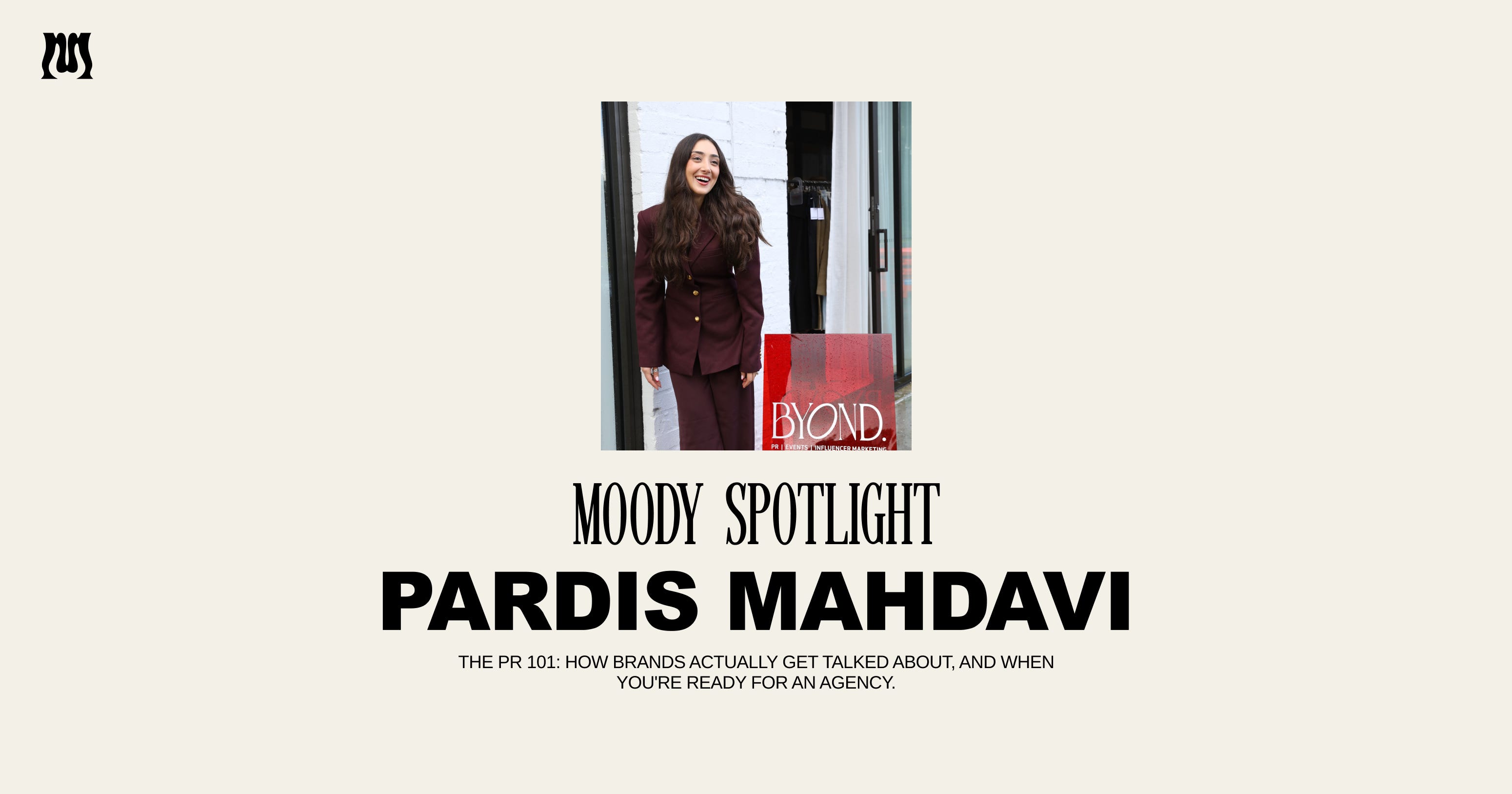
MOODY SPOTLIGHT, the interview edition. You know girl of the week, where you meet the girl. This is where we open the books: one woman, one real business decision, and the actual mechanics of how she made it. This week: Pardis Mahdavi, Founder of BYOND.
BYOND, at a glance
→ The agency: boutique PR and communications, Sydney based, working across beauty, fashion, wellness, food and beverage, hospitality and travel.
→ The founder: Pardis Mahdavi. She’s worked on brands like ghd, Ole Henriksen, Crown Sydney, Lululemon and VEGAMOUR’s launch into Australia.
→ What they do: media relations, influencer partnerships, events and founder profiling, with every account senior-led.
→ The proof: BYOND Showings, their first in-person event, brought 13 brands and 200+ guests into one room and went on to generate 400+ pieces of coverage.
“Who, specifically?”
That’s the first thing Pardis asks every founder who comes to her saying they just need people to know who they are. Her follow-up is my favourite line in the whole interview: “Awareness on its own is a very expensive way to feel busy.”
Every brand I speak to right now wants cut-through, and most of them haven’t decided who they’re trying to cut through to. Pardis makes that decision first, then gives every single thing a brand does a job. A brand trying to get into retail needs a completely different plan from one chasing sales or a founder who wants a profile, and getting that wrong is how visibility budgets quietly disappear.
I met Pardis at an HSR Aussie Angels event in Sydney, and she has been showing up ever since. Somewhere between all those rooms she became a genuine friend and our go-to girl for anything PR, and she’s now one of our MOODY Sydney city leads. We love her, and when she talks about getting the right fifty people in a room, she’s speaking from experience.
01 — Give every tactic a job
Her first job with any brand is getting specific. “I want to know who the brand needs to reach, what they want those people to do once they know about it, and why they should care right now.” Once those answers exist, she says, “the strategy gets sharper, the story gets clearer and the budget goes much further.”
Ask Pardis what strategy-led PR actually means and she gets very practical, very fast. “Nothing goes out because ‘that’s what you do at launch.’” Before her team pitches a single journalist, they agree with the brand on what it needs most, whether that’s sales, stockists, credibility or a founder profile. Then each tactic is assigned a role in getting there.
“A beauty editor exclusive might be there to build credibility, a creator gifting round to drive sales, and a founder interview to open doors with retailers.”
Compare that to the press release sent to a list and left to chance. Nobody can tell you whether it worked, because nobody decided what it was for.
She’s also refreshingly honest about what PR can’t do. “PR isn’t marketing. Marketing is designed to drive a sale today. PR builds the brand people choose tomorrow.” So BYOND agrees KPIs with every client up front, usually a monthly target for quality coverage in the titles their customers actually read, watch or listen to. Alongside that, she watches for the signs a brand is growing: more people searching for it, more followers, inbound interest from media, retailers and creators, and the brand coming up in conversation without anyone pitching it.
Her most generous line in the whole interview is this one: “Not every brand needs PR, or is ready for it yet. If what you need is immediate sales, paid marketing might be the better investment right now.” I love that a publicist said that out loud.
→ So what: before you spend a dollar on visibility, write down the one thing you need it to do this quarter. If you can’t, that’s your first job.
02 — How you actually get press in 2026
According to Pardis, getting coverage starts with the story, because a product launch on its own is rarely news. Her team digs for the angle before a single email goes out, “because it’s the difference between a reply and a delete.”
Journalists agree. In Muck Rack’s State of Journalism 2026 survey, 43% said it was rare to get a pitch relevant to their beat, yet 86% said at least some of their work started with one. So the pitch still works when it’s done properly. Here’s Pardis’s version, which I’d screenshot:
Find the angle only you can tell. A milestone, a surprising number, a founder with real expertise, or a link to something people are already talking about.
Pick the person, not the list. Every journalist has their own beat, audience and way they like to receive stories.
Make it easy to say yes. Strong imagery ready to go, a founder who’s available and samples on hand.
Use the first hit. “Coverage builds credibility, and credibility makes the next pitch easier.”
The founder piece is where she gets really good. “Media can’t interview a product, but they can interview a person with a point of view.” What makes a founder interesting isn’t the origin story, it’s what they know that people would pay to learn. Her example is REN Haircare’s Renee Marshall, a master colourist with decades behind the chair, which makes her an expert on breakage, scalp health and the at-home blowout rather than “a founder with a brush”. Founders who can comment on the wider conversation in their category, not only their own product, are the ones media come back to.
New media was the bit I was most curious about. About one in three journalists now publish independently, per Muck Rack’s first State of Creator Journalism report. “Substack writers, podcast hosts and creators have built communities that trust their taste, and that trust is what makes them so powerful for brands,” Pardis says.
“Their audiences treat a mention as a personal recommendation, so the approach has to feel personal too.” That means thinking about what genuinely fits their world rather than sending the same pitch you’d send a masthead, and it’s “often a conversation over time, not a single email.” Mastheads still carry the credibility, the business stories and the gift guides that drive sales. Her summary is the cleanest description of a modern media plan I’ve read:
“The masthead gives you the headline, and new media gives you the conversation. When the two work together, a brand feels like it’s everywhere.”
03 — Make your customers feel like insiders
When I asked what’s actually getting cut-through, I expected her to pick between stunts, IRL and AI content. She went straight to IRL, and specifically to community.
“Customers want to feel like influencers and be treated like them.”
The brands doing well right now, in her words, “are putting their customers at the centre, building a status system where their VIPs feel special, recognised and rewarded.” That might be first access to a launch, an invite to an intimate event or “a gift that makes them feel chosen.” Then comes the line every founder should stick on their wall: “When a customer feels like an insider, they talk about the brand the way an influencer would, and that word of mouth is worth more than any paid post.”
This is the whole reason MOODY is a room rather than an audience, so I nodded so hard reading it I nearly pulled something. The brands that win are the ones whose customers feel part of something, and the smartest influencer strategies are built on top of that community.
What’s overrated? Paying an influencer because she sold out someone else’s product. Her influencer ladder is the most useful thing in this piece if you’re working with a small budget:
→ Start with contra. Partner with a range of creators and see who genuinely connects with the brand and whose audience responds. “That stage tells you more than any media kit can.”
→ Then pay one or two. Put your money behind paid posts with the creators who already supported you organically. “They already like the product, their audience has already seen it, and the content feels real because it is.”
→ Only then, an ambassador. It’s the most valuable creator relationship a brand can have, and the biggest commitment. “Never jump straight into an ambassadorship without knowing how that creator’s audience responds to your brand.”
Her test for events is brutal in the best way: “If the same message could land in an email, it probably doesn’t need an event.” The pretty-photos problem “happens when the styling is planned before the story,” so BYOND starts with what every guest should walk away with, “whether that’s a story to write, content to share or a genuine connection with the brand.” Then it’s the guest list. “Who’s in the room matters just as much. Fifty of the right people will always do more than two hundred of the wrong ones.” The work doesn’t stop when the doors close either: “The follow-up is where most of the coverage is won.”
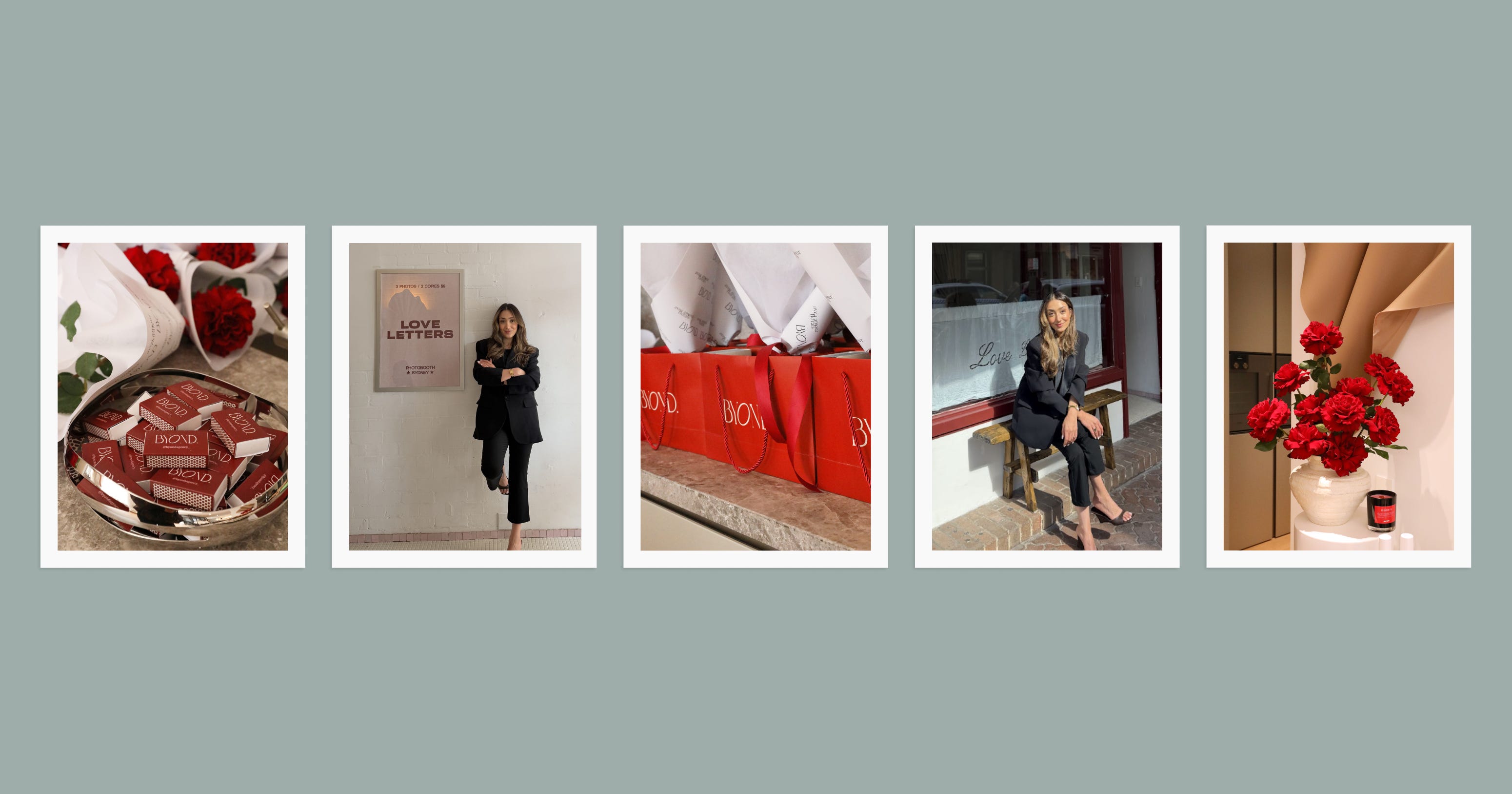
She put all of it to work at BYOND Showings, a showroom-style event in Rose Bay that brought media, influencers and tastemakers together with 13 brands, including Napoleon Perdis, REN Haircare, Àerre and Wilhelmina Studio.
“The idea was simple: create a room where brands could connect directly with the people who shape what gets covered, posted and bought, and where discovery felt genuine rather than staged.” Her verdict on why it worked is three words long: “the guest list.” More than 200 people came through, including editors from Vogue Australia, AFR, Mamamia and News.com.au, plus creators like Jules Robinson, Jadee and Phoebe Spiller. The event generated more than 400 pieces of coverage with a reach of over 12 million.
I did the maths on that, because I can’t help myself. Four hundred pieces across thirteen brands averages out at roughly 30 pieces of coverage per brand from a single event, which is a serious return on one room. The part most people wouldn’t know is the lead time: it took two to three months to plan from scratch. “If you want it done well, start planning early.”
04 — How to hire a PR agency (and when not to)
Bookmark this one if you’re weighing up whether it’s time. Pardis says you’re ready when four things line up:
→ A story worth telling. A launch, a milestone, a founder with something to say or a move into a new market gives media a reason to care.
→ You know who you are. A clear message, a clear look and a clear idea of who the brand is for. “If that’s still shifting, it’s worth getting right first, because media will notice.”
→ You can commit. PR builds over time and the real momentum usually comes after a few months. If the budget only stretches to one month, a focused project might suit you better than a retainer.
→ You’re ready for attention. If a story takes off, can you keep up with stock, orders and enquiries? “Great coverage for a product people can’t get their hands on is a missed opportunity.”
When you’re choosing an agency, look for one that “asks about your business before it talks about its contacts”, knows your category, and is honest with you. “A good agency will tell you what’s realistic, even when it’s not what you want to hear.” Her red flags are the two I’d underline: anyone who guarantees coverage (”editorial can’t be bought, so nobody can promise it”), and the agency where the senior team wows you in the pitch and then hands you to someone you’ve never met once you sign. She’d add one more test that founders forget: “Chemistry matters too. You’ll be sharing your brand’s biggest moments with this team, so you should genuinely enjoy working with them.”
That last one is exactly why BYOND is boutique by design. The people who build your strategy are the same people talking to media every day, there are no layers of approval between a good idea and getting it out the door, and the scope fits the brand, whether that’s a retainer, a launch, media only or an influencer focus. A new client’s first weeks go into strategy and a press kit, plus a one-on-one session for founder-led brands to dig out the angles “the founder hadn’t thought twice about.” Then it’s introductions to media and creators, and weekly updates on what’s landed and what’s next. “Larger agencies do brilliant work at scale,” she says, “but for brands that want a partner who’s genuinely invested and moves at their pace, boutique is the difference.”
The two most common mistakes she sees are expecting overnight results and “bringing PR in too late”, because “the brands that commit for the long run are the ones that see real results.” Media plan months ahead, especially for gift guides and seasonal features, so if you have a launch in the first half of 2027, the time to talk to a PR agency is now, not the week before it hits shelves.
Rapid fire with Pardis
Because this series comes with a rapid fire round, and nobody leaves without doing it.
What’s the mood right now? “Growth.” The team and the client roster are both expanding heading into 2027.
Most unhinged thing you’ve done for your career? Hand-delivering samples across Sydney on a Friday night so an editor had them for her Saturday morning shoot. “My client wasn’t missing out on that coverage.”
What do you want most? A 30 Under 30 list, ideally before she turns 30. Pardis, consider this your nomination.
What are ambitious women spending too much time on, and not enough? Too much time comparing themselves to other people’s highlight reels. Not enough time celebrating their own wins, out loud.
Advice to you five years ago? “Back yourself sooner. You’ll never feel completely ready, and that’s okay.”
What do you want the MOODY girls to find you for? Anything that gets a brand talked about: launches, media coverage, founder profiles, influencer and brand partnerships, and events with a reason to exist. Plus honest advice if you’re not sure you’re ready. “I’d rather tell you to wait than sell you something you don’t need.”
Where can we find you? @byondagency_ and @pardismahdavi on Instagram, and byond-agency.com.
The ask
Pardis told me exactly who she’d love to hear from after reading this.
→ Australian brands ready for their next big chapter, whether that’s a launch, a new category or finally getting the recognition they deserve at home. Beauty, fashion, wellness and hospitality are where she feels most at home.
→ International brands launching in Australia or New Zealand that want a local team who know the market and can make them feel like they’ve always belonged here.
→ The one intro that would change her next 90 days: a marketing director at a major beauty house planning their 2027 launches in Australia.
If that’s you, or you know the person, reply to this email or DM @byondagency_ and I’ll make the intro.
Pardis, thank you for being so generous with your playbook, and for everything you do for this community as our Sydney city lead. This is the PR 101 I wish I’d had years ago.
The question I’m leaving you with: if you had to give every piece of visibility work in your business a single job this quarter, which ones would still make the cut?
Tell me. I read everything.
Love Brooke x
MOODY is Australia’s answer to the serendipity Americans take for granted. The room where founders, operators, corporates and creatives are in the same group chat, and it turns out they needed each other. These are the girls who get it and we are in a MOOD.
This newsletter is the highlight reel. The WhatsApp is where we actually live.
Every city, growing weekly.