


MOODY SPOTLIGHT, the interview edition. You know girl of the week, where you meet the girl. This is where we open the books: one woman, one real business decision, and the actual mechanics of how she made it. This week: Mel Drennan, Managing Director of Napoleon Perdis.
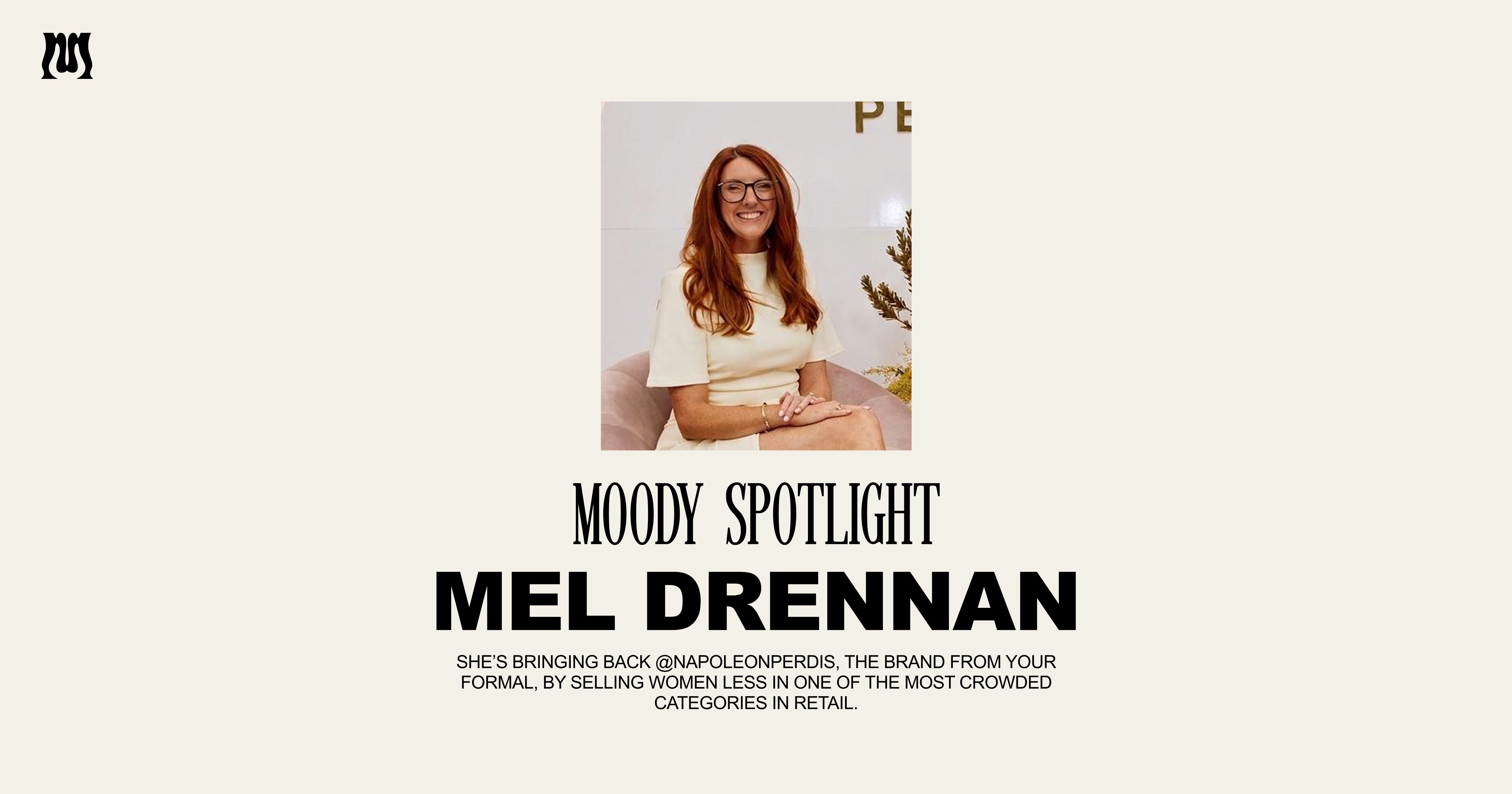
Napoleon Perdis, at a glance
→ The brand: Australian makeup, first store in Paddington in 1995, best known for foundation, primer (“not to prime, is a crime”) and the counter makeover.
→ The operator: Mel Drennan, Managing Director. Ex-THE ICONIC and Catch.com.
→ The bet: fewer, better products, a quarterly subscription called Your Golden Ritual, and getting back onto pharmacy and salon shelves.
“Electric.”
That’s the word Mel Drennan uses for the mood inside Napoleon Perdis right now. The first Your Golden Ritual box sold out, the upgraded foundations have landed, and after eighteen months of rebuilding she says the brand is “finally on the front foot.”
It’s a word you don’t often hear about a brand that went into voluntary administration in January 2019 and was sold to KUBA Investments a few months later. Mel is the one who has been doing the rebuild, and one of the biggest calls she made along the way was not to start again. They properly debated a full rebrand, with a new name and a clean slate, and decided to keep the name. “You can’t manufacture thirty years of trust.”
She came in from the other end of retail entirely, having spent the best part of a decade taking THE ICONIC from startup to market leader and then leading a turnaround at Catch. “I’d done the scale-up story, and this was the more interesting one. I knew what it looked like to build something from nothing. What I hadn’t done was bring an icon back.”
She also walked into one of the most crowded categories in the country. Global beauty is a $450 billion industry, and Mecca alone turned over $1.43 billion in the year to December 2025. Mel’s read on all that noise is the reason I wanted her in this series:
“Beauty is crowded. But it’s crowded with brands asking women for more: more steps, more products, more decisions. I saw room for one that gives back more than it takes.”
I met Mel at a NORA NRF Bring It Home event, where we both had the pleasure of hosting, and I was smitten instantly. We’ve been hanging out in the retail leaders circle ever since, and I am so stoked she’s now part of MOODY. Very few people in Australia have brought a brand back from administration, and Mel has told me she wants the MOODY girls to come and find her for exactly that kind of advice.
01 — Don’t rebrand. Reintroduce.
Being this recognisable cuts both ways, and Mel is clear-eyed about it. The upside is she never has to introduce herself. “Say ‘Napoleon’ and she already has a memory attached: a first foundation, a counter makeover, the look she wore to her formal.”
I’m one of those women. I wore Napoleon to my high school formal, and while we were still in high school my sister lauren moody and I did the three-day Napoleon makeup artist course on the Gold Coast. When Mel talks about the counter memory, I know exactly which one she means.
The downside is that most women still picture the brand as it was. Some customers remember the peak, some remember the administration, and plenty just assume it disappeared.
“So the job isn’t building awareness. It’s earning a second look.”
A rebrand would have thrown away recognition that took three decades to build. In Mel’s words, a new name means zero recognition, zero memories, and zero reason to pick you up over the hundred other brands on the shelf. Then she said my favourite line of the whole interview: “The name was never the problem. The business behind it needed rebuilding, and that’s a very different thing. You don’t knock down a house with great bones because the plumbing’s bad.”
So they kept the name and changed who the brand is about. A brand built on one man’s face now puts the spotlight on the woman wearing the product: real women, minimal retouching, every age and life stage. The artistry stays, but it’s been redefined as artist-level performance in a product she can apply herself on a Tuesday morning in under ten minutes. “We didn’t reinvent. We reintroduced. Same attitude, new face, grown up alongside the women who grew up with us.”
→ So what: before you spend money on a rebrand, check whether customers actually have a problem with your name, or with your stock, your range and your service.
02 — Grow properly, not loudly
This is the part that gets my retail brain excited, even though nobody will ever post about it. 2025 was the reset year: a leaner range, stable stock, disciplined pricing, new systems from the ERP to the 3PL, and repaired relationships with retail partners.
Mel doesn’t dress it up.
“None of it is glamorous, but it’s what lets a brand grow properly rather than just loudly.”
Moving to a new ERP and 3PL while the business keeps trading is genuinely hard work, and it decides whether stock actually reaches the shelf when a customer goes looking for it. The range had also grown too big, with too many launches and too much noise, so she cut it back to “fewer ranges, stronger icons” and pointed the whole business at foundation and primer, the two categories where NP loyalty has always been built.
The first proof point landed this year with a foundation upgrade. Same shades she already knows, with higher SPF, smoother application and more skincare in every formula, reworked for the Australian climate, with more shades coming by the end of next year. I love this move, because improving a product she already buys asks very little of a loyal customer. “When she gets a great result every time, she comes back.”
What the business earns goes back into innovation and brand, which Mel describes as “a flywheel, not a campaign.”
She’s also refreshingly honest about the trading conditions. “Australian retail is a tough place to trade right now, and like a lot of brands our size, protecting cashflow has had to come first.” The global numbers back her up: McKinsey now expects global beauty growth to slow from 7% a year to 5% through 2030. In a market like that, a smaller range also means less cash tied up in stock that isn’t selling.
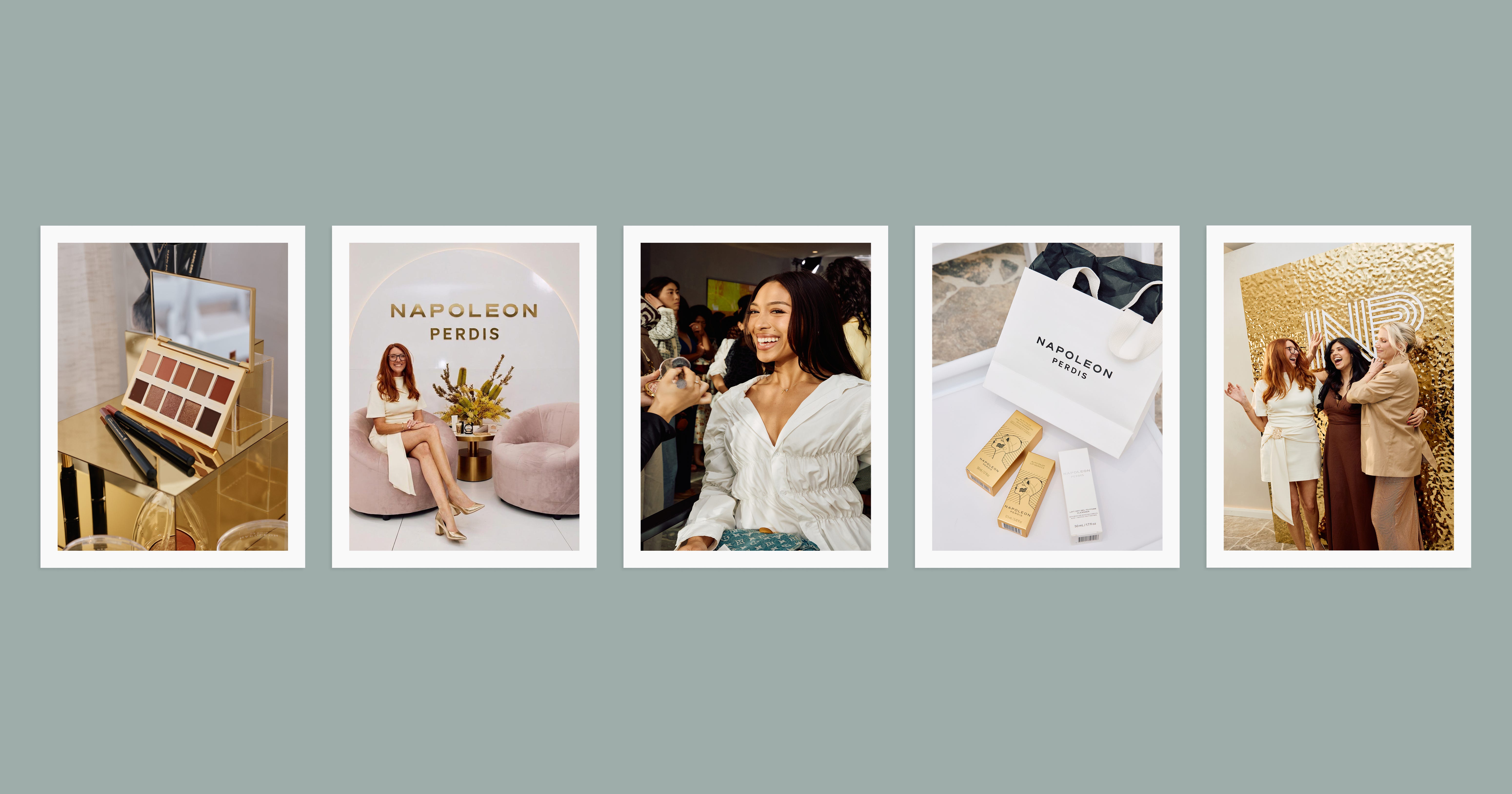
03 — Out of the aisle and into her bathroom
This is where Mel’s years at THE ICONIC really show. “At THE ICONIC, every click told you something.” A department store counter tells you almost nothing in real time, and by the time sell-through comes back from a partner, Mel says, “the moment has often passed.”
Her answer is Your Golden Ritual, a quarterly subscription. She does a short quiz on her colour profile and coverage, and four times a year a curated edit of full-sized products arrives at her door. That’s over $2,000 of product a year for the equivalent of $2 a day. The idea came from Mel’s own life and her team’s: “So many of us are leaders, mums and jugglers of everything, and beauty had quietly become one more chore on the list.”
The spring box sold out and started shipping in the first week of September. There’s already an early presale open for the summer box, shipping from the first week of December, because they didn’t want anyone missing out a second time. Kelly McCarren and Alisha Bhojwani hosted a live podcast event for the launch, which Mel describes as “the moment it all came together.”
I did the maths on this, because it’s the first thing I’d want to see if I were an investor looking at this business. The equivalent of $2 a day is roughly $730 a year, or about $180 a box, for over $2,000 of full-sized product. For her, that’s an easy yes. For the brand, the mechanics are just as good. A subscription is paid for before the box is built, which helps with cashflow and means you know how much stock to make. Every renewal is a customer you didn’t have to pay to win again, which in retail terms means a lower cost to acquire her and more value from her over time. For a business that has spent the year protecting cashflow, that’s a very sensible format to build.
What interests me most is what the subscription does to the relationship. “We’re not waiting for her to walk past anymore. We’re in her bathroom every season, hearing directly what’s working for her.” Every subscriber hands over her shade and coverage before the first box ships, so the brand holds its own customer data instead of waiting on a retail partner’s reports, and it grows every quarter. Mel’s pulling it into one picture of the customer and using AI so the team spends “less time chasing numbers and more time acting on them.”
She’s not romantic about the data either. “Data will never replace the counter. That’s where she feels special: she sits down, gets a makeover, and has someone’s full attention.” What she’s building is both: “the warmth of the counter and the smarts of the data, working together.”
→ So what: if you sell wholesale, find one format that gives you a direct line to your customer. Even a small direct channel gives you customer data that wholesale reports can’t.
04 — The contrarian bet
I asked Mel what bet she’s making that the rest of the category isn’t. No hesitation: “That she wants less, not more.”
Most of the category is built on launching more often and selling longer routines. Mel’s bet is that her customer is exhausted by it. “She doesn’t need another product to figure out. She needs fewer ones she can trust, that work every time, and that fit into the life she’s actually living.”
The research is drifting her way. McKinsey says the “more-is-more consumption” era has ceded ground to shoppers who are “value conscious, skeptical of hype.” In Euromonitor’s 2024 Asia Pacific beauty survey, 32.1% said they’d rather buy fewer, higher-quality items.
Every decision in this piece goes back to that one bet: the tighter range, the upgraded hero foundations, a subscription that takes the aisle-standing off her plate. Mel puts all of it through a single question: “does this give her more than it takes?”
“Less noise, more impact. I think that’s where the category is heading, and we want to be the brand that got there first.”
My read: I think Mel is right about where the category is heading, and I’d love to see more Australian brands brave enough to cut their range the way she has.
Rapid fire with Mel
Because this series comes with a rapid fire round, and nobody leaves without doing it.
Most unhinged thing you’ve done for the business? Launching a brand-new subscription and a full foundation upgrade within weeks of each other, while still rebuilding the business underneath them. Would she do it again? “Absolutely.”
What’s the mood right now? “We’ve done the hard yards, the launches have landed, and the team can feel the momentum. It’s the growth chapter, and everyone knows it.”
The thing you want most? “For NP to be the comeback story other brands study.” She wants to stand on a stage one day and share all of it, the hard parts and the mistakes included. (Mel, when you’re ready for that stage, I would love to host it.)
When did you realise you were building a community, not just a brand? It started with her team, the people who stayed through the hardest times. “You can’t buy that kind of loyalty.” Then she noticed it everywhere: “Everyone has a memory, and everyone wants to see us back.”
What are ambitious women spending too much time on, and not enough? “Too much time on the small decisions. What to wear, what to buy, which serum, which shade.” Not enough on themselves and each other. “Every great thing I’ve done has come from someone sharing their experience with me.”
Advice to you five years ago? “Take the risks. Not everything will go to plan, and that’s okay. Catch didn’t go the way I’d hoped, and neither did Green Friday, but I learnt more from those chapters than from any win.” Plus: “it’s not all on your shoulders.”
What do you want the MOODY girls to find you for? “To help them grow.” Ecommerce, building a team, a tough chapter, “or just needing someone to say ‘you’ve got this’, come find me.”
Where can we find you? Melissa Drennan on LinkedIn, @napoleonperdis on Instagram, napoleonperdis.com, “and on your doorstep every season with Your Golden Ritual.”
The ask
The one intro that would change Mel’s next 90 days: pharmacy and salon partners who want Napoleon Perdis back on their shelves.
→ Pharmacy groups. “Pharmacy is where she shops every week.” It’s also where the momentum is. Chemist Warehouse network sales rose 14% to $10.3 billion in FY25, with beauty named among the growth categories.
→ Salon groups. “Salons are where she already trusts an expert’s advice,” which suits a brand built on artistry.
In Mel’s words: “We’ve done the hard work. The range is tighter, the foundations are upgraded, the stock is reliable.” If that’s you, or you know who runs category at a pharmacy or salon group, reply to this email and I’ll make the intro.
The question I’m leaving you with: what are you still adding to your business that your customer would actually thank you for taking away?
Tell me. I read everything.
Love Brooke x
Mel, thank you for opening the books on this one.
So glad the NRF Bring It Home stage put us in the same room.
MOODY is Australia’s answer to the serendipity Americans take for granted. The room where founders, investors, operators, corporates and creatives are in the same group chat, and it turns out they needed each other. These are the girls who get it and we are in a MOOD.
This newsletter is the highlight reel. The WhatsApp is where we actually live.
Every city, growing weekly.