

In 1995, the year Elle is set, advertising had one job: interrupt the show. Thirty seconds of someone else’s story wedged into yours, and the whole industry ran on the wedge.
In 2026, the biggest beauty brand in the world didn’t buy the ad break. It bought into the story itself, and the campaign wrapped around Prime Video’s Legally Blonde prequel is the most complete picture I’ve seen of what replaces the wedge. Not an ad next to the culture. A brand written into the culture, with a checkout attached.
Quick disclosure, because you know I do this: I hosted the Sydney launch, retail media is part of my day job, and yes, I interviewed a chihuahua named Bruiser Woods in a professional capacity. Park all three. The campaign is the story, and it would be even if I’d watched from the cheap seats.
The anatomy of the thing
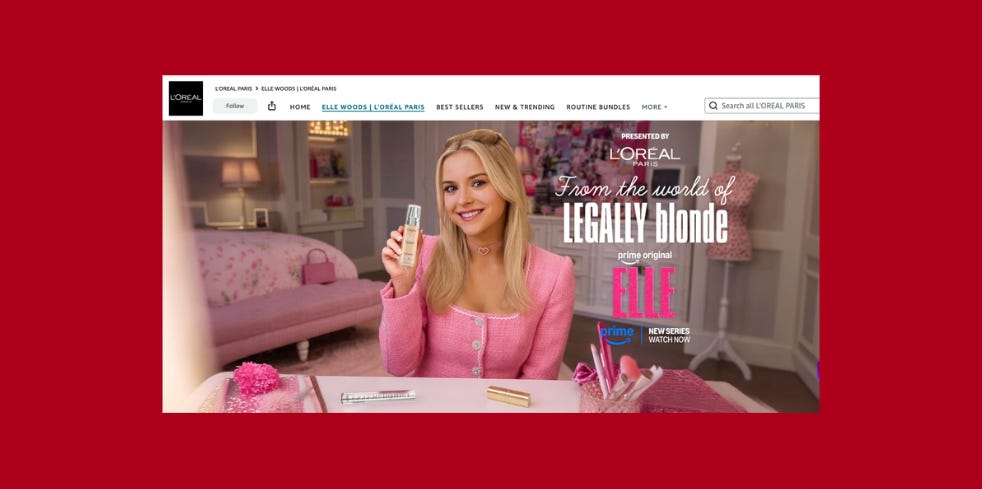
The script layer. L’Oréal Paris products appear inside the episodes: Colour Riche Lipstick, Voluminous Mascara, True Match foundation. The detail that separates craft from clutter: all three were genuinely on shelves in 1995, when the show is set. A teenage Elle Woods reaching for Voluminous is period-accurate production design, not a paste job. L’Oréal Paris CMO Georgia Hack calls authenticity “our primary filter: if an integration feels like a commercial interruption, the modern consumer immediately tunes out.” That’s the bar now: survive the fandom’s scrutiny.
The casting layer. Lexi Minetree, the lead, is a L’Oréal Paris ambassador in real life. Character, actress and brand share a spine, and you cannot media-plan your way into that. Proof she was always the right call: her audition. The open call asked for two scenes and a 30-second slate. Instead: “It just kind of hit me that I had to recreate her Harvard admissions video, because I was like, what’s the most extra thing I could do? That’s what Elle Woods would do. She would make this a whole event.” She shot it at home, her mum reluctantly assisting, and Reese Witherspoon delivered the yes in person, so deadpan Lexi briefly thought she was being rejected. A girl who understood, before she even had the job, that the content IS the pitch. Of course she’s the face of this campaign.
The money layer. Around the show sits the machinery: co-branded pre-rolls, tune-in ads, custom TVCs and shoppable formats inside Prime Video, one creative world across ten markets, all of it able to land a viewer on a branded L’Oréal Paris store on Amazon. Fall for the character, want the lipstick, buy the lipstick, never leave the building. The distance between a feeling and a purchase, which advertising has spent a century trying to shorten, is now a few clicks inside one platform, and every step reports back. Swisse bought the local version for their Ultivite multivitamins, proof the machinery scales down as well as up.
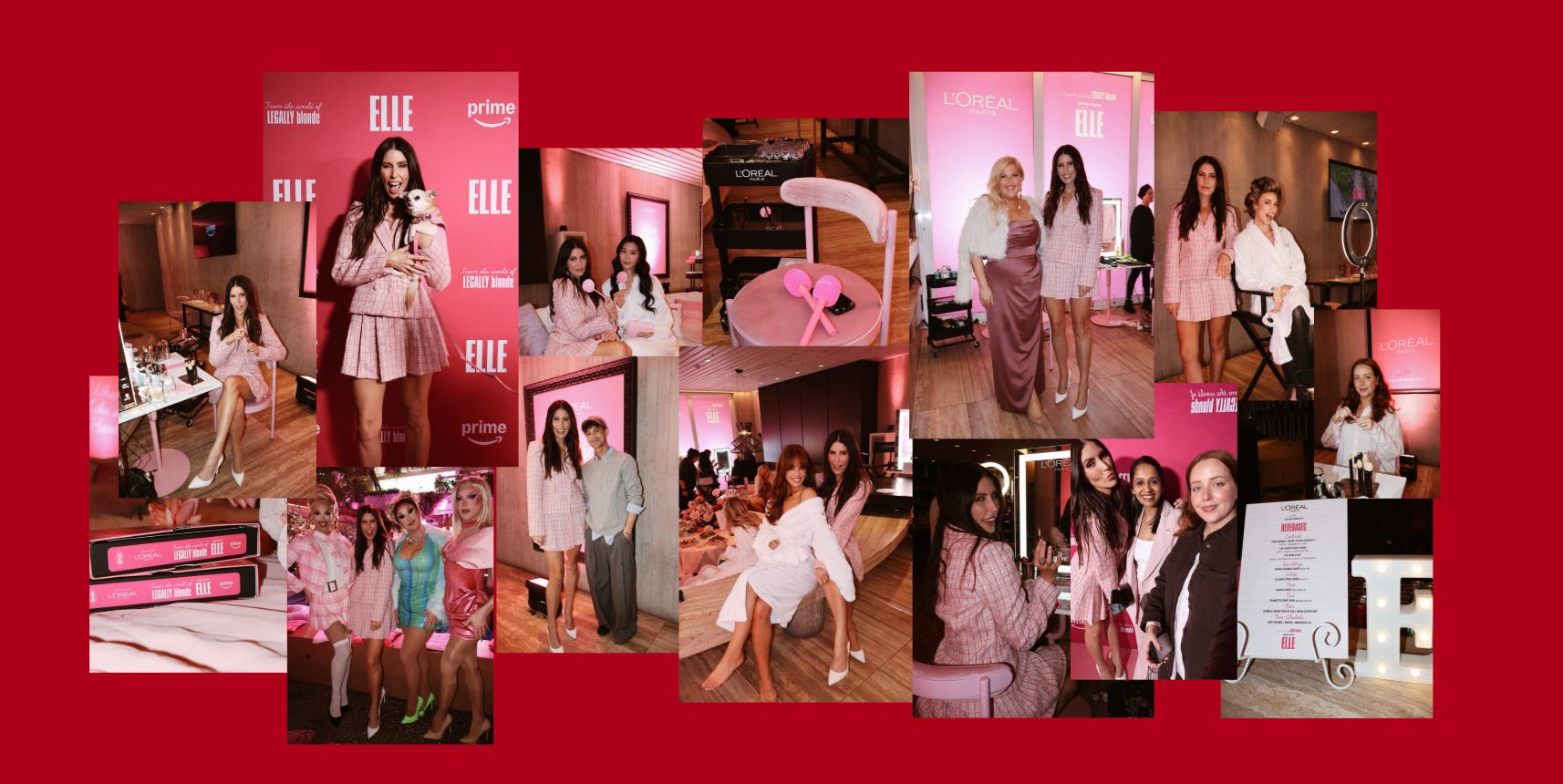
The culture layer. Off-platform, Maximum Effort (yes, Ryan Reynolds’ agency) built the US campaign around Elle Woods as “the original GRWM girl”, era-appropriate video diaries and all. In Sydney, our version of that thesis was the get-ready-with-me suite I hosted at the Ivy Penthouse: a room full of creators being styled hours before the party, every chair filming. The launch didn’t have content. The launch was content.
And my favourite object of the year: retro Elle VHS tapes with L’Oréal Paris products hidden inside. A VHS tape. As an activation. In 2026. Half the room needed the format explained to them. I would die for that tape.
This is structural, not a stunt
If Elle were an isolated experiment, it would be a cute case study. It isn’t. Two months earlier, the same playbook ran on The Devil Wears Prada 2: a L’Oréal Paris campaign with Kendall Jenner and Simone Ashley, a staffer handing Jenner a Colour Riche lipstick with the line “make yourself presentable.” Hack has named the whole strategy “Beautytainment” and describes deals like this as a way to “acquire equity in a cultural IP.” Business of Fashion is asking whether Elle is the new blueprint for product placement. Wrong tense. It’s the blueprint’s second print run.
The rest of the market is sprinting the same direction with less grace. Emily in Paris scripted placements now go for 500,000 to a million euros each. Jake from State Farm just appeared as an actual character in a Netflix series. Brands aren’t buying adjacency to stories anymore. They’re auditioning for roles in them, and the difference between the clumsy version and the Elle version is the difference between renting culture and being cast in it.
Now the number that should stop every Australian marketer mid-scroll. Retail media is the fastest-growing ad channel in this country, hitting $2.3 billion in 2026, and WPP forecasts it will overtake ALL of television advertising here by 2028. Television. Seventy years of the industry’s main event, about to be outspent by the shelf. Amazon alone is tracking toward roughly $85 billion in ad revenue this year, with 315 million people now watching ad-supported Prime Video globally, more than 5 million of them here every month. And the show doing the heavy lifting? Number one on Prime Video worldwide, number two in the US within a day, season two ordered before episode one aired.
I put the why to the two people who built the local execution. Willie Pang, who runs Amazon Ads ANZ, points to the fandom math: Amazon’s research shows passionate fans are 55% more likely to recall brand presence than disengaged viewers. Fandom isn’t a soft metric. It’s the multiplier. “That emotional connection between fans and content is precisely what drives commercial outcomes for brands,” he told Inside Retail.
His framing is the cleanest summary of this whole piece: “The most powerful brand connections happen when you meet audiences in an authentic and natural way. From cultural storytelling to shoppable moments, brands can now move audiences seamlessly from inspiration to action.”
Then there’s Chris Wilson, Head of Brand Innovation ANZ, whose Brand Innovation Lab dreamed up the VHS tapes and the whole creative world of the launch. From the outside, a deal like this looks like it fell out of the sky fully formed. I asked him where it actually began.
“It all starts with audience signals. We can see what people are browsing, buying, and of course watching. And we could see that L’Oréal Paris’s audience would love to be a part of this. So we brought them in.” The fit everyone calls iconic wasn’t a hunch. It was in the data before it was on a rooftop.
His placement-versus-storytelling distinction is the line I’ll be repeating in meetings all year: “Brand storytelling starts when we’re actually adding something to the story. A brand shouldn’t come in and just be an ad placement. It should actually be adding to the experience.” That’s why L’Oréal Paris makeup artists were working the room instead of a logo wall. His creative lesson from the whole campaign, after formally acknowledging that bringing team fluffy and chihuahuas together is always perfect (Bruiser was in attendance, this is journalism): “Really start with those audiences. Once we had that, everything else starts to naturally come together.”
Steal this, at any budget
The Elle campaign is a hundred-million-dollar machine, but the logic works at every size. Three moves.
Buy alignment, not interruptions. An ambassador who genuinely uses your product beats a celebrity renting your logo, whether that’s Lexi Minetree or a micro-creator with 8,000 followers who already loves what you make. The fandom data above is why: aligned attention compounds.
Shorten the distance between the feeling and the checkout. When someone falls for your brand in your content, at your event, in the group chat, count the steps to purchase. Every step is leakage.
Build the measurement in from day one. “We can’t track brand” is officially a dead excuse. If a mascara in a 1995-set dramedy can be attributed through to a conversion, so can your pop-up, your podcast and your newsletter.
And because this community shares its cheat codes: the machinery has a front door. The Brand Innovation Lab Chris leads exists to dream these partnerships up with brands, and his advice for Aussie brands wanting in: “Reach out to your sales rep. Reach out to us, and let’s start talking about it.” The audience signals already exist. The question is whether your brand is in the conversation.
Advertising isn’t a thing that happens between the content anymore. It IS the content, with a receipt.
So, one question for every founder and marketer reading this: in five years, when the ad break is a museum piece, what role will your brand have earned in the stories your customer actually cares about? Background extra, lead, or not cast at all?
Brooke x
immediate subscribe. a brilliant piece and exactly what i’ve been explaining to brands all year. will be sharing this with anyone who reads