

Hi divas 🤍
Last week I sat in a room with Australia’s biggest podcasters and watched two platform execs describe an internet that has stopped paying for being liked.
Jordyn Christensen and Kirsty Wilson put the room together. Jordyn runs podcast partnerships at Spotify, Kirsty is Global Partnerships at Meta ANZ. Toni Lodge and Ryan Jon keynoted, and if you don’t know them: five episodes a week on their show Toni & Ryan, over a million downloads a month, built out of rude jokes that went viral on TikTok.
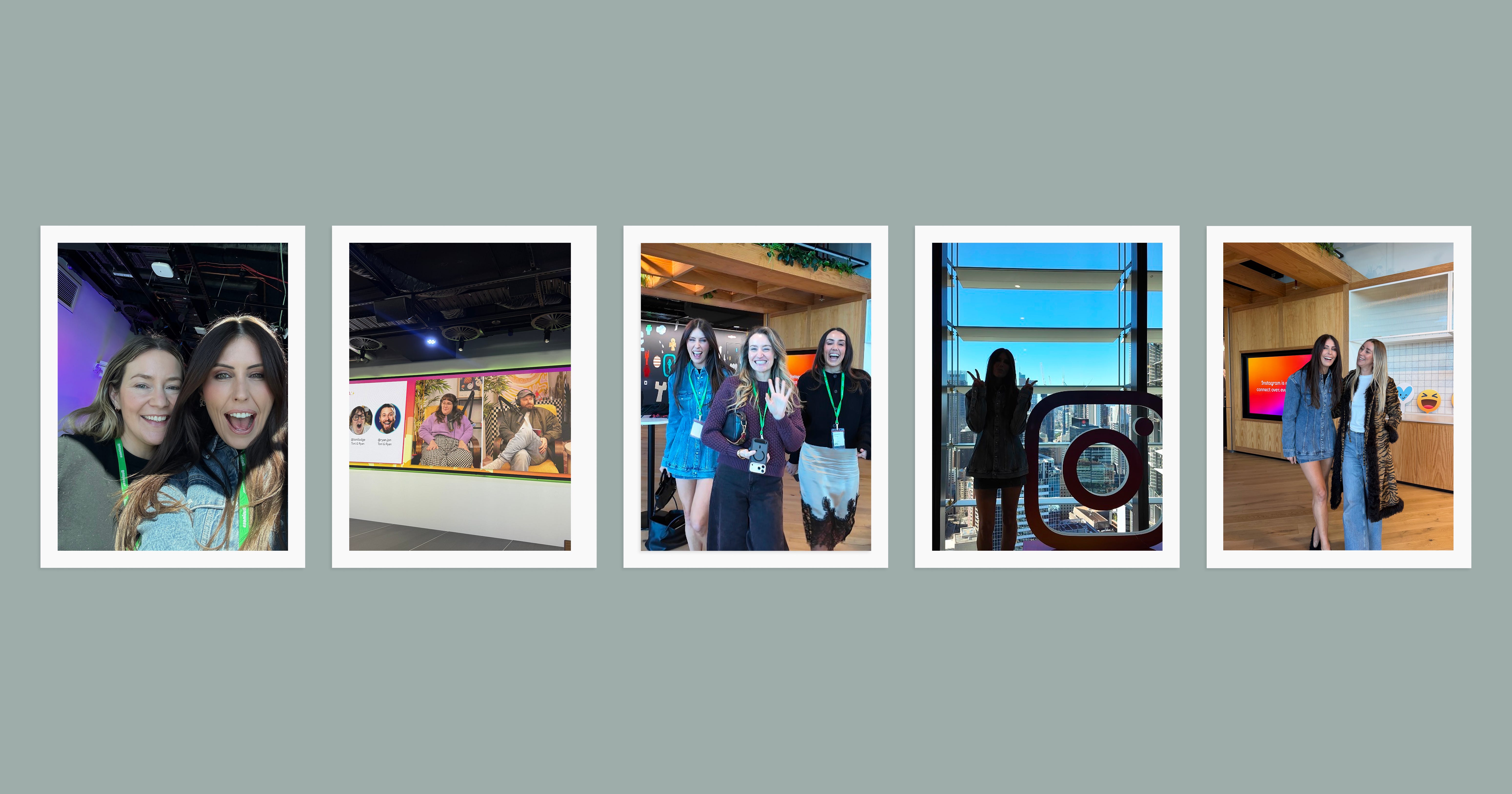
I debriefed with Jordyn afterwards and we did not stop talking for an hour. This is that conversation, with receipts.
It starts where everything started that week. Tate McRae picked up a makeup wipe and the whole creator economy fell out of it.
You’ve seen the video. Private jet to Lollapalooza, post show routine, more than eighteen million views, and the wipe never touched her face. Not once. It hovered.
The internet went feral, obviously. But nobody’s talking about what happened eleven days later. Neutrogena posted a reply voiced by an animated makeup wipe, asking everyone to please respect its privacy as it adjusts to fame. Iconic, no notes. A marketing academic told the New York Times the episode probably grew awareness, on the basis that nobody was otherwise going to be discussing makeup wipes in the Times.
So read the ledger. She paid in credibility. They collected in reach. Then they got a bonus round for the trouble.
Jordyn’s read: “This isn’t the first time this kind of thing has happened. Audiences (especially Gen Z) are savvier than they get credit for, and they’re exhausted. It’s not authentic, and it takes away from creators that are creating great content”.
This isn’t a Tate McRae problem. She was just the one holding the wipe when the model stopped working for creators.
A rate card is not a business
The generalist influencer was never a business. It was a rental agreement.
You rent reach from a platform monthly. You sell it on to a brand at a discount. The second either party changes the terms, you own nothing. No authority, no niche, no list, no feed. A rate card and a good week.
Jordyn’s version:
“We’re seeing the real death of the generalist lifestyle influencer, and hearing more about the rise of the expert influencer, and leaning into more authoritative sources. Audiences are gravitating toward creators who also hold 9-to-5 jobs. People navigating real careers, not selling a lifestyle pipe dream. And when you’re in the day job, you build experience and expertise you simply can’t speak to from the outside looking in.”
I’d already felt it land in my inbox. A brand sent me a brief last month and the first page was a list of things they didn’t want. No day in my life. No morning routine. Nothing beauty led. What they wanted was the teardown, the how does this actually work version. They were paying for the part of me that knows things and had specifically ruled out the part of me that turns up looking fine.
Five years ago that brief was the exact opposite document. Same category, same money, reverse polarity.
Now the less flattering half, because I’m not standing outside this. Most deals I sign carry an exclusivity clause. Standard, priced accordingly, everybody does it. It is also, said out loud, a brand paying me not to be an expert on anything else in that category for a set number of months.
I sign them. I’d sign the next one. But I’ve stopped reading exclusivity as a premium and started reading it as a price, because every category I sell out of is a category I’ve agreed not to be trusted in.
Jordyn’s argument is that saturation forced it. The space is more crowded than it has ever been, general short form and a rate card no longer add up to a living, and the host read ad model is getting harder to survive on. Not because anyone decided it was distasteful. Because the maths stopped working.
Brands didn’t grow a conscience
They moved the budget.
Influencer spend used to sit in the brand bucket, where the job was awareness and nobody had to prove very much. It’s been quietly reclassified as performance, and performance budgets have always been measured to death. Every line gets judged on cost per acquisition and average order value like any other media buy.
So the attribution was always there. Nobody was pointing it at us.
Being liked was free money right up until somebody started counting. Likeability stopped being a line item. You cannot attribute a vibe. You can attribute an expert who moves a category.
Rachel Lai made the same case this week from the buying side, and better than I just did. She’d just onboarded a client and committed tens of thousands to partnerships, and none of the top affiliates driving those sales are making get ready with me content. What those creators charge reflects their authority, their expertise, and the trust their audience places in them.
Her closing line is the one to keep: when anyone can copy your lighting, your editing and your scripts, “the one thing you keep is your ability to think for yourself.”
Cat Spanti is the clearest version of this. You go to her because she’s a known authority on one thing, not because she surfaced in your feed on a Tuesday. She also moves product, and her ShopMy is the proof. Measurable, which is the entire point.
The platforms are building for the same shift. Instagram is testing Series, which groups your reels into a titled hub with a watch next button. Its VP of Product Tessa Lyons said the quiet part out loud at the Scaleable Summit: the platform wants to be part of creators’ long form strategy now, not just the short form one.
Meta spent five years training all of us to make things fifteen seconds long. It has now built a channel guide.
Taste is a mood. Expertise is a position you can be held to.
Toni put it in one line: “When you try to be relevant to everyone, you’re relevant to no one.”
If you’re reading this thinking you’re not a creator so none of it lands, it does. Every one of us has a professional reputation that either says something specific or says nothing at all. This was never an Instagram problem. It’s what happens to anyone whose whole pitch is that they’re broadly good at things, in a market that has stopped paying for broadly.
Authority needs room
The same market that started paying for expertise also started rewarding length. Not a coincidence.
A reel can make a claim. Only long form shows the thinking underneath it, and the thinking is what’s being bought. Which means the expert shift and the long form shift are one shift, and we’ve spent three years reading the top of the funnel like it’s the bottom of it.
TikTok is where that error lives, and it’s still the best discovery machine ever built. It let in a whole generation of creators who’d never have been allowed in the room otherwise. Toni and Ryan are the proof, and Toni is unsentimental about it: “The short form videos for us is literally what began this whole thing, and we wouldn’t be here if we hadn’t taken a chance on posting it.”
But discovery is a job, not a destination. Jordyn:
“TikTok will be important forever as a top of funnel tool. But I think that is truly what it’s becoming. This top of funnel tool to drive people to long form sources.”
Her read on why the audience moved is the part I keep repeating, because it isn’t about attention spans at all. Gen Z want things that feel a bit media. Educational, inspirational, made with intent. Not five seconds of something.
A million views on something nobody can find again isn’t a business. It’s a party trick.
Kirsty put the same point from inside the building, about the grid everybody agonises over. Nobody comes to your grid as much as you do. Vanity metric, her words.
She’s right and I hated hearing it, because I ran a perfect grid until six months ago. Photo of me. Filler pic for the aesthetic. Photo of me. Repeat forever. Arielle Thomas, Jordyn and I went back through our 2020 grids in the group chat recently and it was so shallow it was almost restful. Cute pictures of three girls with not one thought between them. A simpler time. Honestly, I miss it.
Then the local number nobody is using. Edison’s Infinite Dial Australia 2026 has fifty five per cent of Australians consuming podcasts monthly, up from fifty two per cent last year. Buried in the same report: TikTok weekly usage, down a percentage point year on year.
Same market. Same twelve months. One up, one down.
Own the thing nobody can switch off
Long form has a second advantage: it’s the only format that lives somewhere you control. Nobody has an RSS feed of your reels.
Here’s the test I run on everything now. If the algorithm changed its mind tomorrow, would this still exist?
MOODY passes. Five hundred plus women in a WhatsApp community and a calendar of events, with no feed sitting between me and them. Nobody can throttle it. Nobody can deprecate it. We’re growing it across channels but the list is the asset.
Long form expert content and education is the natural next expansion and I’ll be honest, we’re still working out what that looks like for the community. But the direction isn’t in question. Jordyn:
“Being able to own newsletter audiences, being able to own RSS feeds. These things can carry across or stand alone of individual algorithm changes. You’re not putting all your eggs in one basket.”
The numbers back it.
→ Substack: five million paid subscriptions. Four hundred and fifty million dollars of gross writer revenue in 2025. Close to a hundred thousand publications now earning money, up from fifty thousand a year earlier.
→ Spotify: over a hundred million dollars paid to podcasters globally in the first quarter of 2025 alone. In January the Partner Program threshold dropped from twelve episodes and ten thousand consumption hours to three episodes, a thousand engaged listeners, two thousand hours.
→ Meta: three billion dollars paid out to creators last year, up thirty five per cent year on year, per Kirsty in the room.
Platforms only cut the entry bar when they need supply. Read that as a hiring ad, not a favour.
The money has moved to retention, not reach. Kirsty walked us through two pieces of content from the same podcast, and the longer one that actually held people paid out double.
None of this is new, which is the funny part. Subscriptions and AdSense are the OG revenue streams. We’re not inventing the future. We’re going back to charging people for something good, after a decade of asking advertisers to cover it.
The advertiser model makes the creator the product. The subscription model makes the work the product.
Only one of those survives a bad week.
Everyone wants a village
Toni and Ryan solved the ownership problem years ago, while everyone else was still arguing about it. They refuse to send anyone anywhere.
Ryan: “If I’m sitting on my couch and I’ve picked Facebook, don’t tell me to go somewhere else.” You chose the app. They just want to entertain you in it.
Their private Facebook group of a hundred and fifty thousand has never carried a sponsored post. Deliberately. They answer their own comments and their own DMs.
Which sounds like the opposite of owning an audience, right up until you notice where their money is.
It’s Patreon. It converts precisely because the free tiers were never a funnel.
Ryan’s reasoning is the least complicated thing in this article: “If you want someone to comment on your stuff, the least you can do is read it.” Then the line I’m never going to beat: everyone wants a village, but nobody wants to be a villager.
If you’re on the brand side
Two things follow from all of this, and neither of them is a content calendar.
The first is who you brief. Stop buying reach and start buying authority in your actual category. A creator with a defined niche and a measurable audience will move product in a way a general lifestyle name will not, and you’ll be able to prove it, which is the part your CFO cares about.
The second is what you make. If audiences have moved to long form, your brand needs a long form answer, and most don’t have one. A podcast, a series, an owned newsletter, something with room in it. Right now nearly everyone is still buying fifteen second placements inside somebody else’s feed and calling it a strategy.
Brief the expert. Build the long thing. That’s the whole memo.
The read
Tate McRae spent her audience relationship on a wipe she never used and the brand kept the change. Toni and Ryan spend nothing and charge for the trust directly. Same asset, opposite directions.
Which brings me back to that brief. A brand paid a premium for the version of me that knows something, and specifically didn’t want the version that shows up looking fine. That’s not a category quirk. That’s the market repricing, and the creators who’ve spent five years being pleasant about everything are about to find out what pleasant is worth.
My read: the ones still standing in two years won’t have the biggest audience. They’ll be the ones who can say why anyone would pay them ten dollars a month, in one sentence, without using the words exclusive content.
So what do you actually know? And where are you going to have the room to prove it?
Twelve things we learnt in that room
Before the tactics, the four that actually matter. Name the one thing you want to be called about, and make it one. Move your best thinking somewhere it can breathe. Build one line of contact with no algorithm sitting in the middle of it. Price exclusivity as what it costs you, not what they’re offering.
Now the toolkit.
→ 2/3 of your reels go to strangers. reels are for reach, carousels and stories are where you actually keep people
→ only slides 1 and 2 of a carousel get served, so stop saving the good stuff for slide six
→ you can reorder a carousel after posting. your best slide is data now, not a guess
→ add audio to a carousel and it gets served in the reels tab. same post, new audience
→ “new ep out now” was the worst performing content across the top 100 pods. announcing is not marketing
→ one personal moment outperforms a hundred polished clips. the polish was never the point
→ jump on every new feature the week it launches. meta gives its own products extra visibility and early movers get the growth
→ shares are the metric for entertainment, saves are the metric for education. know which one you’re making
→ write the clip before you record. if you’re cutting after the fact you’re already too late
→ threads is 500m people and australia is asleep. that’s not a risk, that’s a gap
→ facebook pays from 10 seconds. everything shorter is unpaid labour
→ don’t be the girl begging meta for help when you get hacked. turn on 2fa!!!
Brooke x
MOODY is Australia’s answer to the serendipity Americans take for granted. The room where founders, operators, corporates and creatives are in the same group chat, and it turns out they needed each other. These are the girls who get it, and we are in a MOOD.
This newsletter is the highlight reel. The WhatsApp is where we actually live.
Every city, growing weekly.
Another fantastic article 👏